
Find · Chapter 16 · 3 min read
Man bites dog
“I just did what I do best. I took your little plan and I turned it on itself. Look what I did to this city with a few drums of gas and a couple of bullets. Hmmm? You know… You know what I’ve noticed? Nobody panics when things go “according to plan.”
But when I say that one little old mayor will die, well then everyone loses their minds. Introduce a little anarchy.”
- The Joker, The Dark Knight
I studied journalism.
It teaches you to scan the world for anything interesting.
Steve, my lecturer, would say:
“Now, a dog bites a man… yawn that’s not interesting is it?”
The class collectively groaned.
“But what about a man that bites a dog huh? What do you think about that?”
We paid attention.
When you’re talking to potential customers, you’re looking for things that stand out.
Nuggets of information that form a more complete picture of who this person is.
This is done with curiosity and the acronym WWWWH.
- What
- Where
- When
- Why
- How
These words unpack anything you’re told and help you go deeper..
For example Busy Mums aren’t used to sharing the information you need. They’re running on auto-pilot so you’ll need to practice WWWWH to gain more useful information.
You: “How often do you buy your dog’s pet food?”
BM: “Every couple of weeks or so as I do the grocery shopping”
You: “Do you buy the same one each time?”
BM: “Yep Poochie Slops each time I notice the bag is near empty”
You: “What makes you pick Poochie Slops?”
BM: “It’s usually on special”
You: “Have you ever considered any other pet foods?”
BM: “No.”
You: “Why do you think that is?”
Good information doesn’t come easy. It can be tricky to find good information, and sometimes you’ve got to keep digging.
BM: “I don’t have time to look for other pet foods. Baxter eats this one. It’s easy.”
You: “So Baxter eats PoochieSlop without complaints, and it’s easy to pick-up because you’re time poor.”
BM: “Exactly!”
What, where, when, why, and how help you gather feeling words.
Feeling words are emotional.
They’re also gold dust for crafting offers.
When a potential buyer is telling you how they feel they’re telling you what is important.
- Is your problem worth solving? You tell me.
- Does it annoy you?
- Is it irritating?
- Does the thought of not having it solved hurt you?
- Does your product light someone up?
- Are they excited to share it with their friends?
- What makes them so enthused?
For men in particular, looking for emotional cues can be difficult.
If you’re struggling to adapt what, where, when, why, how into questions that lead to feelings language look at an emotions wheel.
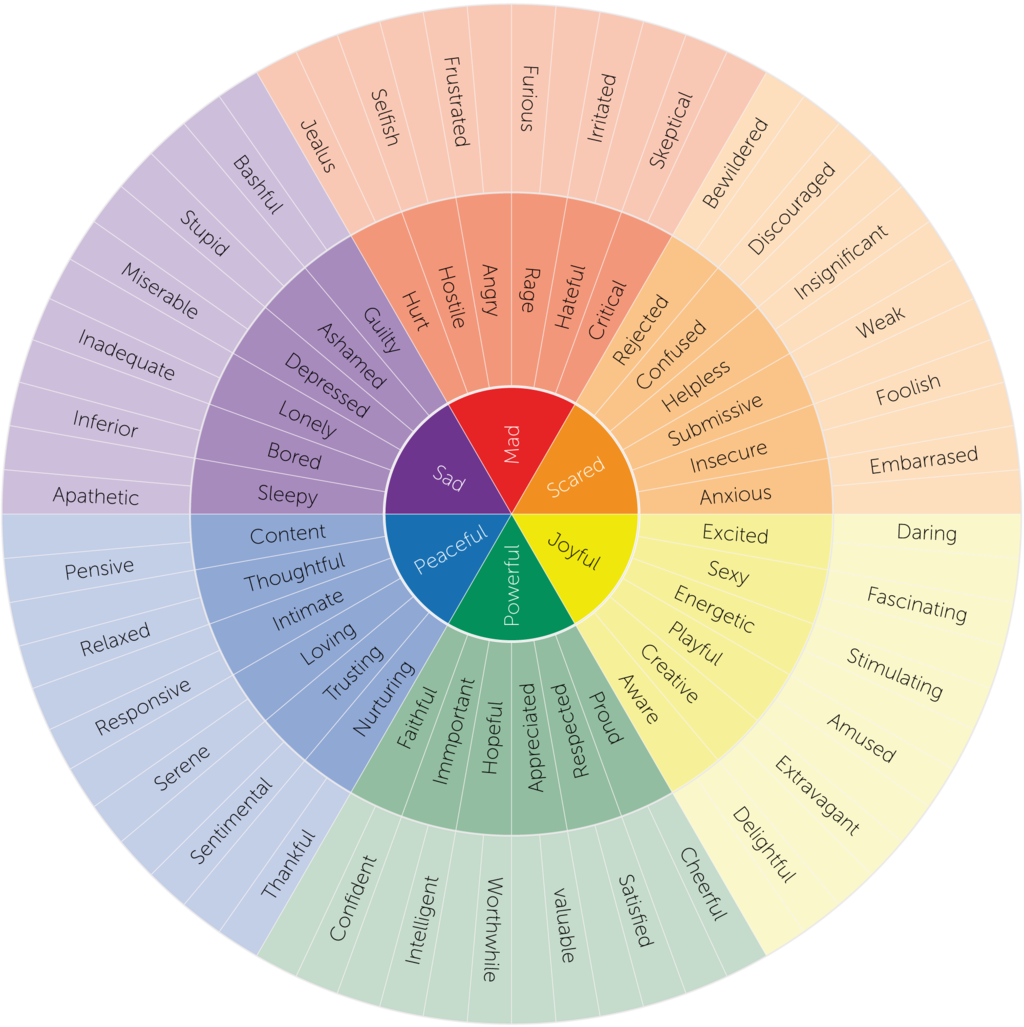
Feeling Wheel, CC BY-SA 4.0, via Wikimedia Commons
You will see your “main” emotions like happy, sad, surprised, fearful, and angry, and then add more words within these mains to help you get closer.
Customer: I just can’t stand it when this thing doesn’t load for me.
You (noticing anger): So when you click through here it is really frustrating?
Customer: Yes! And I need this to load when I’m paying my bills.
If you consciously practice the discovering questions looking for feelings words you’re on the right path.
It will feel silly to begin with and connecting with customers this way feels uncomfortable.
You will get non-answers and reschedules, and be challenged asking questions that don’t come naturally to you.
Here’s a big watch out - most people won’t do this.
They think they don’t have to, and would rather obsess over a logo or what a social media influencer is doing.
Doing the research continually with curiosity is where you win.
Remember your 1st interview is going to be different to your 100th so just pursue that 100th conversation.
Related chapters
What did you think?
Tell me what landed, what didn't, or what's missing.
Give feedback on LinkedIn →