Find · Chapter 26 · 3 min read
The best channels
Jerry: Nobody knows what to do. You just close your eyes, you hope for the best. I really think they’re happy if you just make an effort.
- Seinfeld - The Mango
Let’s talk more about adjacent and shoulder businesses.
These organisations are your future best friends.
It’s a clumsy term for a hardworking part of your marketing channel ecosystem.
Every. Single. Product ever invented has adjacent business.
It’s how the world works.
Are you selling an inventory tracking system to small business owners?
They have accountants that work with them too.
Are you selling finely crafted embroidery that make beautiful gifts?
Wedding registries, craft shops, and farmer’s markets are always looking for novel giving ideas.
Selling a course?
Where else are complementary courses offered can you do a package deal?
Once you get around the fact that collaborating makes LITERALLY EVERYTHING easier, you’ll see opportunities everywhere.
I first read about this concept via Jay Abraham.
Internet marketing gurus love Jay because the principles he teaches become better with online marketing.
That’s because online is easier to:
- Find complementary businesses
- Contact them
- Co-market content together
- Track performance and engagement
- Identify what works well and run it into the ground
What I don’t like about marketing guru world (and once you start searching you will be inundated with Facebook, Instagram, and YouTube ads so consider yourself warned) is a lot of stretching of truth to squeeze you.
Examples include:
- countdown timers
- limited offers
- dropping a pain grenade and then pointing out their unique formula as the only way, etc.
These approaches are high on persuasion and can be sold en masse but don’t serve you (the customer) well. Once you get under the hood, these approaches rarely work the way they are portrayed.
Adjacent and shoulder businesses do work.
It’s an ever-improving way to introduce yourself, engage with customers, and add value.
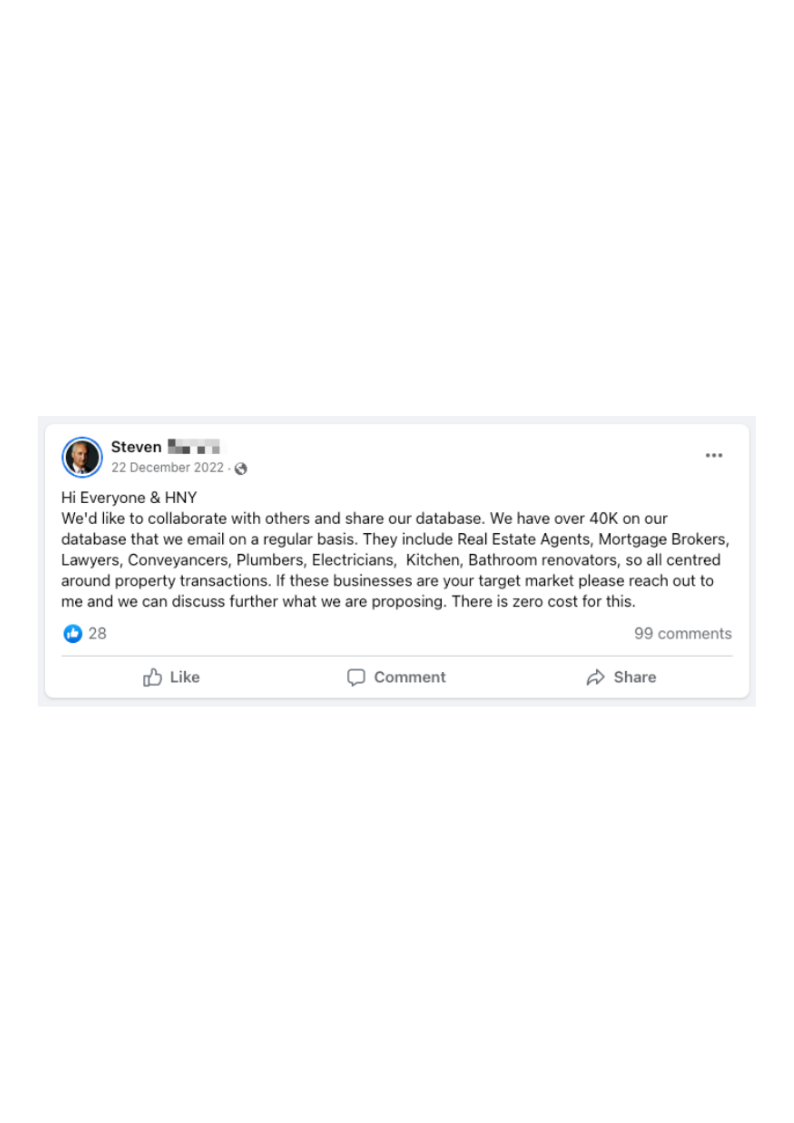
From a local startup community. This guy knows the score.
We’ll cover the “how to do this” in the next section Collaborating for customers.
To help you get an ideas, I’m sharing some example products and what sort of adjacent businesses they could be aligned with.
This list should help get you thinking creatively.
Product: Adjacent or shoulder businesses that could help you sell the product
- Pop-culture sculptures: Movie paraphernalia stores, fan clubs, modern art stores
- Yoga classes: Health and Wellness stores, Neighbourhood Community Centres, Gyms
- Investing newsletter: Accountants, Financial planners, industry associations, Fintech meet ups
- Specialist musical instrument tuner: Music stores, specialist music gigs, music teachers mailing list, venues that host niche music
- Guided forest walks: Tourism information provider stalls, what’s on listings for cities, travel agents that promote your area
There are lots more of course.
Once you start, you are likely going to be looking for obvious ones like: X leads to Y. Over time, you will be able to operate with more flexibility and creativity around how you seek your audiences.
By now, you should have a list of channels and some ideas on who you can contact about collaboration.
What are you going to ask? How are you going to say it? How do you introduce yourself?
Remember it’s going to to a number of attempts to get it right (The 1-10-100 Rule).
The next section is going to make it easier for you by teaching you how to approach and contact people who own these channels, and pitch a collaboration.
So before we go there, let’s get to know the people who own the channels.
Related chapters
What did you think?
Tell me what landed, what didn't, or what's missing.
Give feedback on LinkedIn →